
Key facts
- All medicines and poisons in Australia are classified by how freely they are made available to the public.
- Medicines with a low safety risk are usually less tightly controlled than medicines that have a higher safety risk.
- This system of categorising medicines is called ‘scheduling’.
- Medicines with a lower safety risk may be available at a supermarket or at a pharmacy without a prescription.
- Medicines considered higher risk may be available only with a prescription from your doctor.
Why is the schedule important?
The schedule is designed to protect public health and safety. Some medicines have a higher risk of causing harm than others. Also, some medicines are more likely to be misused, such as medicines that can cause dependence or addiction.
Scheduling is a way of sorting out which medicines or poisons need to be more tightly controlled, and which don’t. Some poisons are so dangerous that they are not to be used at all.
What information is in the schedule?
Each category has different rules for how a medicine or poison should be labelled, sold, bought, stored and thrown away. These categories also tell you if you need a prescription to buy a certain medicine.
How is the schedule classified?
There are 10 categories (‘schedules’) arranged from least tightly controlled to most tightly controlled. Medicines are usually in Schedules 2, 3, 4 or 8.
| Schedule 1 | Not currently in use |
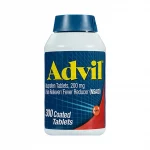
| Schedule 2 | Pharmacy medicine – Medicines that are available on the shelf at pharmacies. |
| Schedule 3 | Pharmacist only medicine – Medicines that are available from a pharmacist without a prescription. These medicines are usually behind the pharmacy counter. |
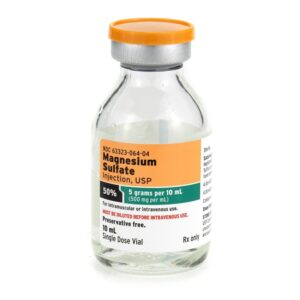
| Schedule 4 | Prescription only medicine – Medicines that must be prescribed by an authorised healthcare professional (such as your doctor). They may be supplied in hospital or bought from a pharmacy with a prescription. |
| Schedule 5 | Caution – Chemicals that are not likely to cause harm. They need suitable packaging with simple warnings and safety directions on the label. |
| Schedule 6 | Poison – Chemicals with a moderate risk of causing harm. They need special packaging with a strong warning and safety directions on the label. |
| Schedule 7 | Dangerous poison – Chemicals with a high risk of causing harm in low doses. They are only available to certain people who are able to handle them safely. There may be special rules for selling, using or storing these chemicals. |
| Schedule 8 | Controlled drug – Medicines or chemicals that have special rules for producing, supplying, distributing, owning and using them. These medicines may only be prescribed by an authorised healthcare professional, who may need a special prescribing permit. |
| Schedule 9 | Prohibited substance – Chemicals that may be abused or misused. They are illegal to produce, own, sell or use except if needed for medical or scientific research. |
| Schedule 10 | Chemicals that are so dangerous they are banned altogether. |
Not all medicines are scheduled. Some medicines such as vitamins and herbal remedies can be sold in supermarkets and pharmacies. These are classified as ‘unscheduled’. It is not considered necessary to control access to these medicines. However, this does not mean that these medicines are harmless. If you buy an unscheduled medicine, make sure you read and follow the directions on the packet. You can also ask your doctor or pharmacist if you have any questions about an unscheduled medicine.
The Poisons Standard lists all the medicines or poisons available in Australia and their classification schedule. The Australian Department of Health lists which schedule a medicine or poison should be in. However, it is up to each state and territory to legislate the scheduling of medicines in their own area. This means that there may be slight differences in the regulation of certain medicines in different states.