What are Adrenergic bronchodilators?
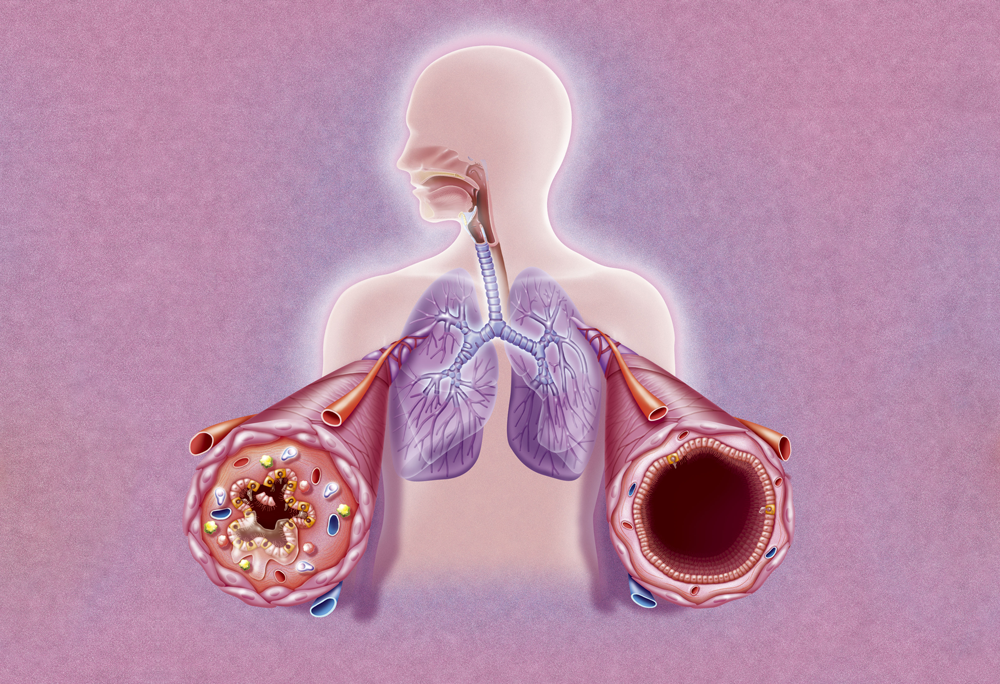
Adrenergic bronchodilators (specifically beta2-adrenoreceptor agonists) dilate the bronchi by a direct action on the beta2-adrenoreceptors on the bronchial smooth muscle and relax the muscle.
There are two categories of beta2-adrenoreceptor agonists used in asthma. The short acting adrenergic bronchodilators are used on an as needed basis to control symptoms of asthma. The longer acting bronchodilators are used regularly, twice daily, as adjunct therapy in patients whose asthma is poorly controlled by inhaled corticosteroids.
Of the three classes of bronchodilators (β2-adrenergic–receptor agonists, methylxanthines, and anticholinergic agents), the β2-adrenergic–receptor agonists produce the greatest bronchodilation in patients with bronchial asthma. β2-Adrenergic agonists are generally preferred both for the relief of acute symptoms and for the prevention of exercise-induced bronchospasm. The recent introduction of long-acting inhaled β2-adrenergic agonists has overcome the principal shortcoming of the previously available drugs of this class, their limited duration of action. However, the possibility of adverse effects with regular use of β2-adrenergic agonists has been raised