






Radiocontrast agents
What are Radiocontrast agents?
Radiocontrast agents are substances such as iodine or barium compounds, administered to a patient using imaging technology, to increase the contrast of an image.
Radiocontrast agents are substances used to enhance the visibility of internal structures in X-ray-based imaging techniques such as computed tomography (contrast CT), projectional radiography, and fluoroscopy. Radiocontrast agents are typically iodine, or more rarely barium sulfate.
Radiocontrast agents are commonly used in detection, characterization and staging of diseases associated with internal organs of a patient. In fact, it is estimated that approximately 75 million X-ray examinations using radiocontrast agents are performed worldwide [1r].
What kinds of contrast are available? There are three broad kinds of contrast available: IV, PO, and PR (rectal). IV contrast is either gadolinium for MRI or iodinated contrast for CT. PO contrast for all ER and inpatient CT scans is dilute iodinated contrast (same agent used for IV contrast in CT).
Something that’s radiopaque is a substance, such as bone and soft tissue, which doesn’t allow x-rays to pass through very well, appearing whiter on the x-ray. Something that’s radiolucent is a substance, such as gas, which does allow x-rays to pass through easily, appearing blacker on the x-ray.
Radiopaque contrast agents are often used in radiography and fluoroscopy to help delineate borders between tissues with similar radiodensity. Most contrast agents are iodine based. Ionic contrast agents, which are salts, are hyperosmolar to blood.
Radiocontrast media are the agents used to increase the contrast of an image, to enhance the visibility of internal structures in imaging technology. Radiocontrast media can be given orally or intravenously. The agents commonly used are barium-based (orally) and iodinated agents (intravenously).
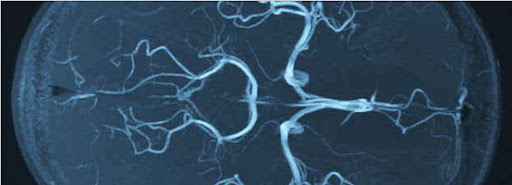
A radiopaque contrast agent absorbs x-rays and thus appears white on x-rays. It is typically used to show the following: Blood vessels. The interior of the gastrointestinal, biliary, or urinary tract. Blood flow in organs.