















Multikinase inhibitors 

What are Multikinase inhibitors?

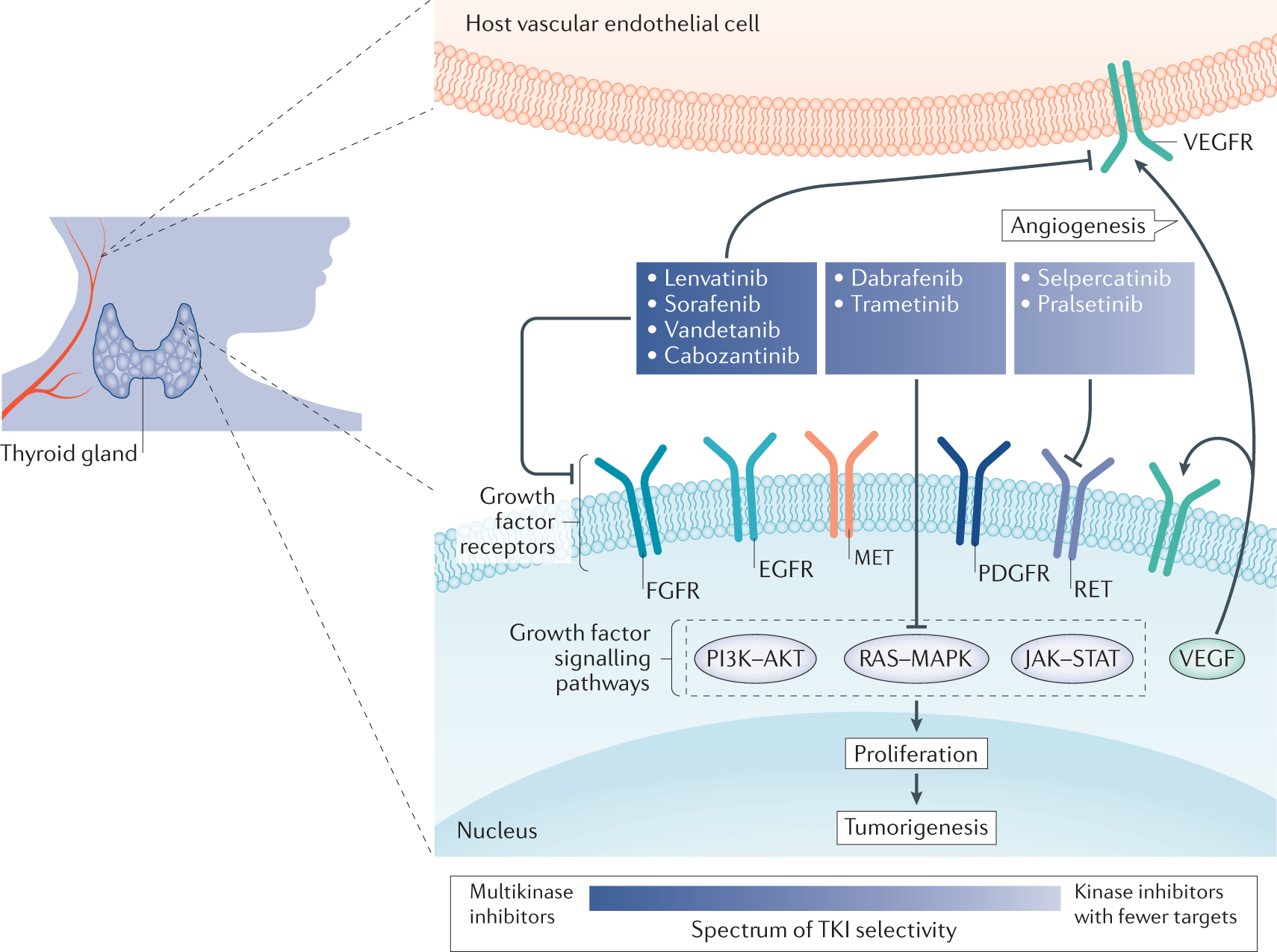
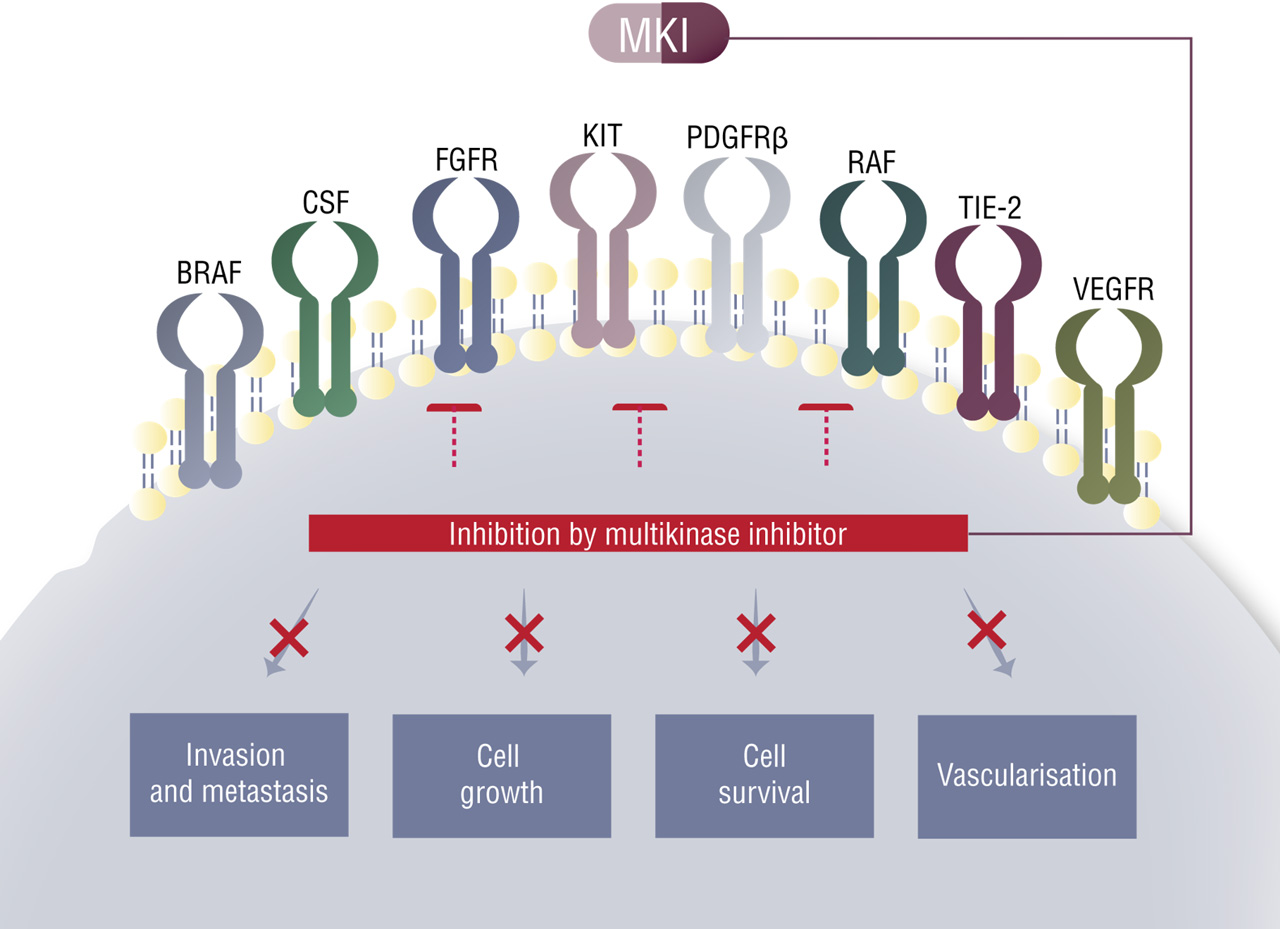
Multikinase inhibitors work by inhibiting multiple intracellular and cell surface kinases, some of which are implicated in tumor growth and metastatic progression of cancer, thus decreasing tumor growth and replication. Multikinase inhibitors may be used to treat advanced kidney cancer as well as other specific types of cancer.

During recent years, a new treatment option with multikinase inhibitors (MKIs) such as sunitinib, sorafenib, lenvatinib, pazopanib, vandetanib, and cabozantinib has shown promising results in otherwise treatment-refractory thyroid cancer

Enzyme inhibitors can be used as drugs to inhibit chemical processes. These include Acyclovir (fighting herpes), methotrexate (fighting bacterial infections as well as cancers), Trazadone (combating depression), and ciglitazone (to address inflammatory diseases).
 
To date, many Type I kinase inhibitors for the treatment of cancer have been approved by the FDA viz. bosutinib, crizotinib, dasatinib, erlotinib, gefitinib, lapatinib, pazopanib, ruxolitinib, sunitinib, and vemurafenib
 
Approved fibroblast growth factor receptor (FGFR) inhibitors include erdafitinib, pemigatinib, and futibatinib. We review the most common toxicities associated with FGFR inhibitors and provide practical advice regarding their management.
Fibroblast growth factor receptor (FGFR) tyrosine kinase inhibitors
DrugTargetType
Erdafitinibalpha1-acid glycoproteincarrier
FutibatinibCytochrome P450 3A4enzyme
FutibatinibATP-dependent translocase ABCB1transporter
FutibatinibBroad substrate specificity ATP-binding cassette transporter ABCG2transporter

List of Multikinase inhibitors

Alecensa

Alecensa

Alunbrig

Alunbrig

Gavreto

Gavreto

Gomekli

Gomekli

Iclusig

Iclusig

Inlyta

Inlyta

Inrebic

Inrebic

Jakafi

Jakafi

Koselugo

Koselugo

Lorlatinib

Lorlatinib

Ofev

Ofev

Ojjaara

Ojjaara

Qinlock

Qinlock

Retevmo

Retevmo

Rydapt

Rydapt