Proteasome inhibitors
What are Proteasome inhibitors?
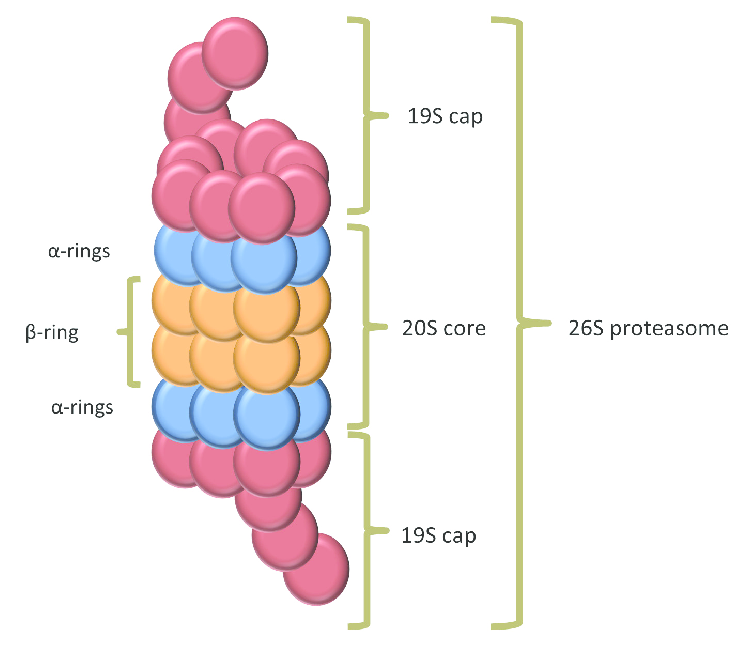
Proteasomes are protease complexes which are responsible for degrading endogenous proteins. Proteins to be destroyed are recognized by proteasomes because of the presence of ubiquitin conjugated to the targeted protein. The ubiquitin-proteasome pathway plays an essential role in regulating the intracellular concentration of specific proteins, thereby maintaining homeostasis within cells. Proteasome inhibitors prevent this targeted decomposition of protein, which can affect multiple signaling cascades within the cell. This disruption of normal homeostatic mechanisms can lead to cell death. Proteasome inhibitors may be used to treat multiple myeloma and certain types of lymphoma.


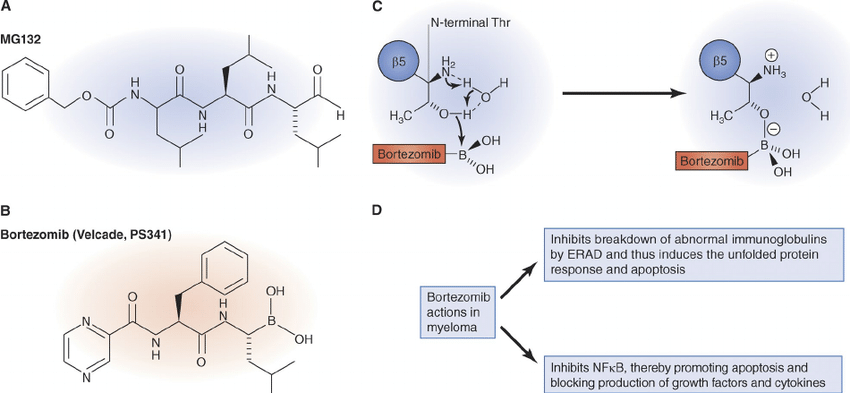
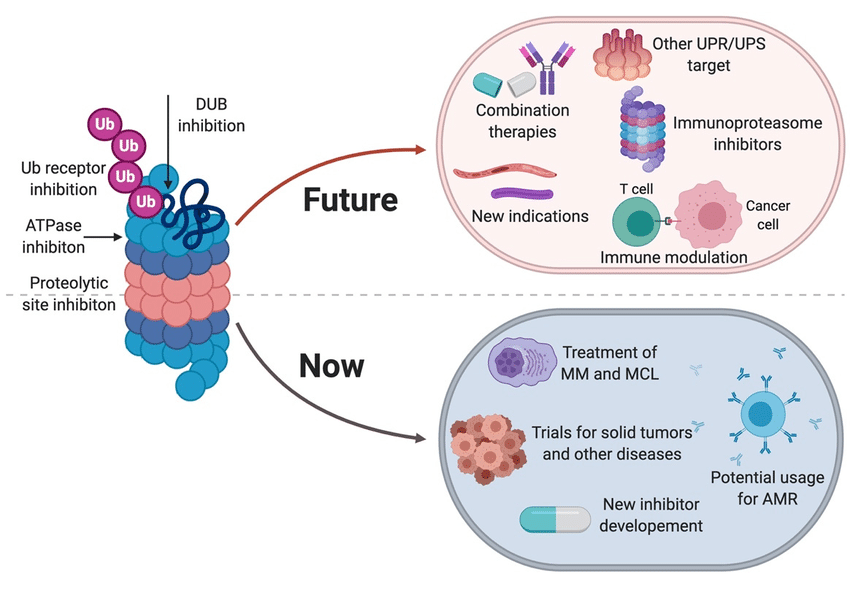
Proteasome inhibitors are an important class of drugs for the treatment of multiple myeloma and mantle cell lymphoma, and they are being investigated for other diseases. Bortezomib (Velcade) was the first proteasome inhibitor to be approved by the US Food and Drug Administration.

| Name | Kinetics | Active moiety |
|---|---|---|
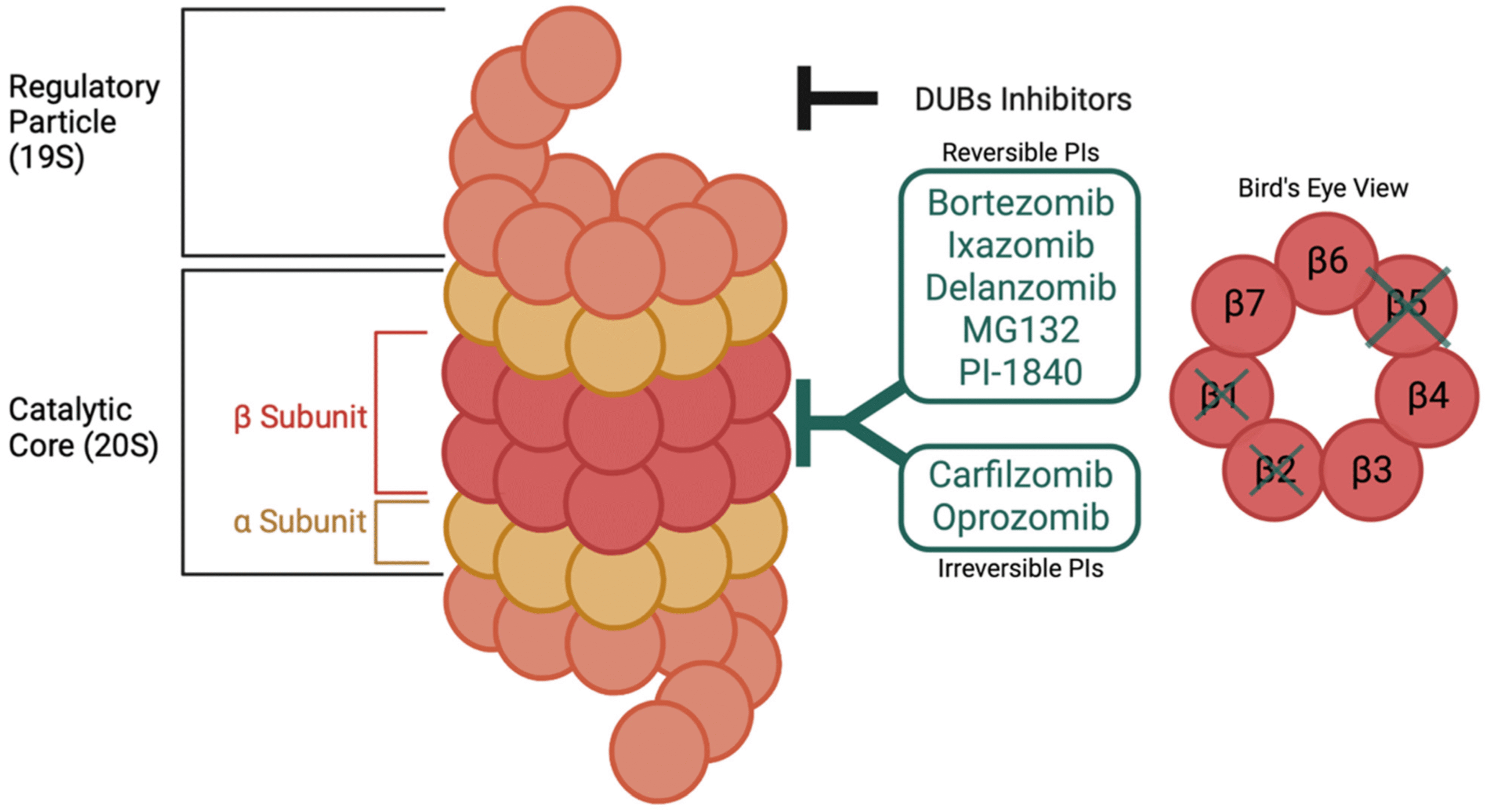
| Bortezomib [Velcade®] | Slowly reversible inhibitor β5>β1>β2 | Boronate |
| Carfilzomib [Kyprolis®] | Irreversible inhibitor β5>β2/β1 | Epoxyketone |
| Ixazomib [Ninlaro®] | Reversible inhibitor β5>β1 | Boronate |
A proteasome inhibitor blocks how cells get rid of proteins that are no longer useful. This causes proteins to build up, and then cells die. Myeloma cells seem to be more sensitive to proteasome inhibitors, and that’s why they die.
The most common types of protein inhibitors include competitive inhibitors, non-competitive inhibitors, uncompetitive inhibitors, and allosteric inhibitors. Competitive inhibitors are inhibitors that compete with the natural substrate for binding to the active site of the protein.