







Serotoninergic neuroenteric modulators
What are Serotoninergic neuroenteric modulators?
Serotoninergic neuroenteric modulators bind to the serotonin receptors in the gastrointestinal tract and either act as an agonist or antagonist.
One of the agents in this class is a selective serotonin receptor antagonist, so it binds to the serotonin receptor and blocks the action of serotonin in the gastrointestinal tract. The agent with serotonin receptor antagonist activity is used to relieve cramping, abdominal discomfort, diarrhea, etc. associated with irritable bowel syndrome.
The other agents in this category are selective serotonin receptor agonists that act in the gastrointestinal tract to regulate bowel function. It is used to treat chronic constipation and constipation related to irritable bowel syndrome.
Serotonin antagonists work to block the 5-HT3 (serotonin) receptors in your gastrointestinal (GI) system and the chemoreceptor trigger zone (CTZ). The CTZ is an area of your medulla oblongata that plays a role in initiating vomiting. Serotonin is a neurotransmitter that also acts as a hormone.
Two 5-HT3 antagonists have been developed to date for the treatment of IBS, alosetron and cilansetron. Alosetron is approved and available in the United States; cilansetron has undergone a large phase III trial program, but is not yet approved.
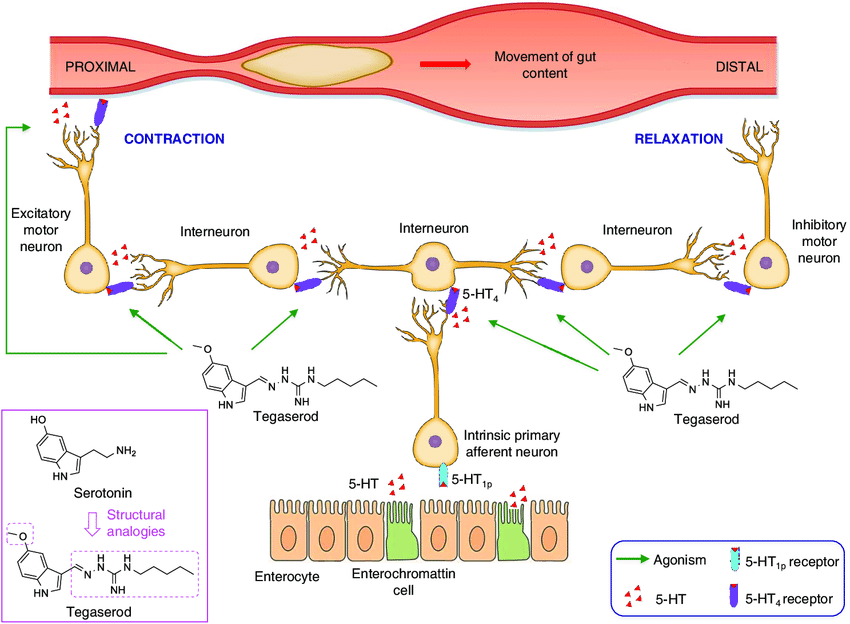
Tegaserod, 5-HT4 partial agonist is used in constipation predominant IBS while alosetron, a 5-HT3 antagonist used in IBS with diarrhea. Other compounds such as tricyclic antidepressants and serotonin selective reuptake inhibitors have been used in some patients with IBS.
Many atypical antipsychotics, such as aripiprazole, asenapine, clozapine, lurasidone, quetiapine, and ziprasidone, are 5-HT1A receptor partial agonists, and this action is thought to contribute to their beneficial effects on negative symptoms in schizophrenia.
List of Serotoninergic neuroenteric modulators
Methylene blue